
Value-Add Real Estate: How Returns Are Created Through Vacancy (And Why Vacancy Isn’t the Risk Most Investors Think It Is)
- Frank Deliessche, MBA, PMP
- Apr 21
- 5 min read
Most people think real estate investing is about buying something in a good area and waiting for it to go up in value.
That’s the version of real estate that gets talked about the most. It’s simple, it’s easy to understand, and in the right market, it can work. But it’s also the version that leaves a lot to external factors. You’re relying on interest rates, buyer demand, and broader economic conditions to do the heavy lifting.
The reality is, the most consistent and repeatable returns in real estate tend to come from something far more controllable: income.
At its core, every commercial property is a function of one thing: how much income it produces. Increase that income, and you increase the value. Not hypothetically, not over time, but directly and measurably. That’s the difference between hoping a property becomes more valuable and actually making it more valuable.
What often gets overlooked is where those returns are actually created, particularly in value-add real estate, where income can be actively increased through execution.
Where Value Is Actually Created
They’re not created by simply owning a property and waiting. They’re created by identifying gaps between a property’s current performance and what it’s capable of producing and then closing that gap through execution.
This is where dynamics like vacancy begin to look very different.
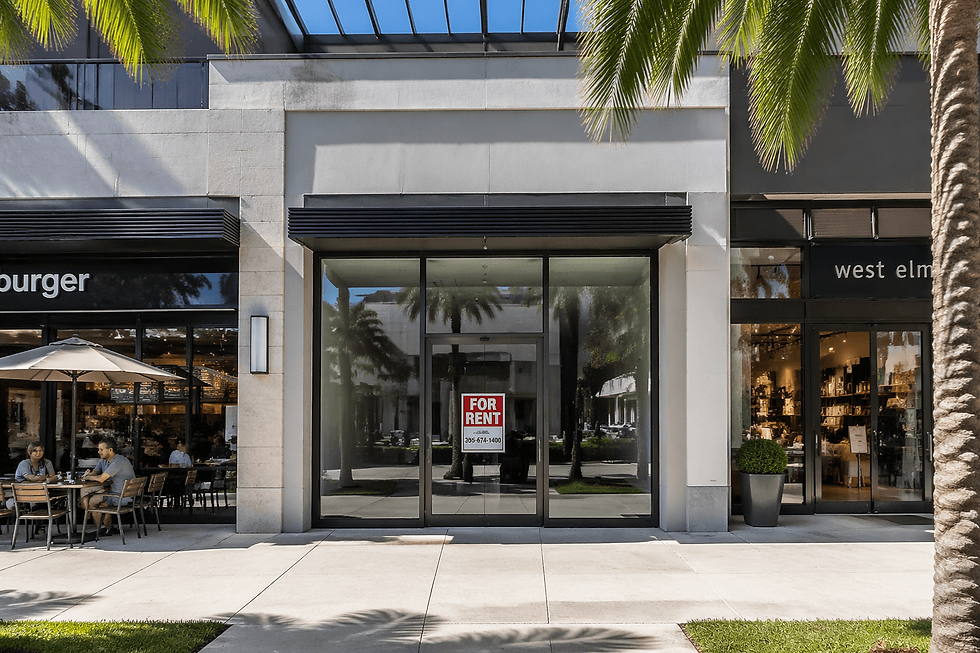
On the surface, vacancy appears to be a negative. It represents lost income, unused space, and uncertainty around future performance. And in certain situations, that assessment is accurate. Some properties struggle with vacancy because demand isn’t there or because the asset no longer fits the market.
But in the right context, vacancy can represent something else entirely.
It can represent potential.
A fully leased property is, in many respects, already optimized. The income is largely set, with only incremental increases over time. The value is stable, but the upside is limited because the heavy lifting has already been done.
A property with vacancy, however, hasn’t yet reached its full potential. The income story is still unfolding. And for the right operator, that creates an opportunity to influence the outcome in a meaningful way.
Instead of asking, “Why is this space empty?” a more useful question is, “What does this property look like once it’s fully utilized?”
The difference between those two states, today’s performance and stabilized performance, is where value is created.
When Vacancy Becomes an Opportunity in Value-Add Real Estate
In many of the opportunities we evaluate, the investment thesis is built around that exact concept. The goal isn’t to rely on market appreciation. It’s to take something that is underperforming for a specific reason and improve it in a way that directly increases income.
Vacancy is often one of the clearest expressions of that opportunity.
When there is underlying demand in the market, vacant space becomes a solvable problem. Leasing strategies can be refined. Space can be reconfigured. The tenant mix can be improved. And with each of those steps, income begins to move in the right direction.
Importantly, that vacancy is often what creates the opportunity to acquire the property at a more attractive basis in the first place. Sellers (or lenders in distressed situations) price in the uncertainty. They discount the asset because it hasn’t been stabilized.
That discount creates room for value creation.
From there, the focus shifts to execution. Who are the right tenants for the space? How should the property be positioned in the market? Does the layout align with current demand, or does it need to be reworked to attract a different type of user?
These are operational questions, and the answers to them directly influence the outcome of the investment.
What’s particularly interesting in today’s market is that vacancy does not necessarily indicate a lack of demand. In many sectors, demand is evolving faster than existing properties can adapt.
Retail is a good example of this.
For years, there has been a broad narrative that retail is in decline. In reality, what has changed is the type of retail that performs well. Large, single-use anchor spaces that were designed for a previous generation of tenants don’t always align with what today’s users are looking for.
But that doesn’t mean the real estate itself lacks value. It means it needs to be repositioned.
There is growing demand from experiential users, fitness concepts, specialty grocers, and service-based businesses that prioritize visibility, accessibility, and proximity to residential density. In many cases, that demand is strong, it simply requires a different configuration of space.
From Underperformance to Income
That’s where thoughtful repositioning comes into play.
A large vacant space can be subdivided into multiple units. Infrastructure can be upgraded. The façade and overall presentation of the property can be modernized. The tenant mix can be curated to create a more cohesive and attractive environment.
These changes are not cosmetic; they directly impact leasing velocity and rental rates. And because commercial real estate is valued based on income, even modest improvements in leasing can translate into meaningful increases in value.
This is why so much of our focus is on opportunities where the path to value creation is clear and actionable.
Not necessarily easy, but clear.
We’re less interested in fully stabilized properties where outcomes are largely tied to external market movement. Those assets can serve a purpose, particularly for capital preservation, but they offer limited ability to influence returns.
Instead, we spend more time on situations where something is not yet optimized, but can be (this holds true for the work we do with distressed assets as well).
Vacancy is often one of the most visible indicators of that.
Of course, context matters. Not all vacancy represents opportunity. The surrounding market, location fundamentals, and demand drivers all play a role in determining whether that space can realistically be absorbed.
Strong population growth, nearby residential development, traffic patterns, and tenant demand all contribute to whether a leasing strategy is likely to succeed. Without those factors, vacancy can persist. With them, it can be transformed into income.
Understanding that distinction is critical.
Because at its core, real estate investing is not just about identifying assets, it’s about identifying opportunities to create value.
And more often than not, those opportunities are found in the gap between what a property is today and what it has the potential to become.
Thinking About Value-Add Real Estate Opportunities?
The best opportunities aren’t always obvious, they’re created through strategy, execution, and identifying where value can be unlocked.
If you’re interested in how we approach value-add real estate or want to see what we’re currently working on, we’re always open to a conversation.


Comments